
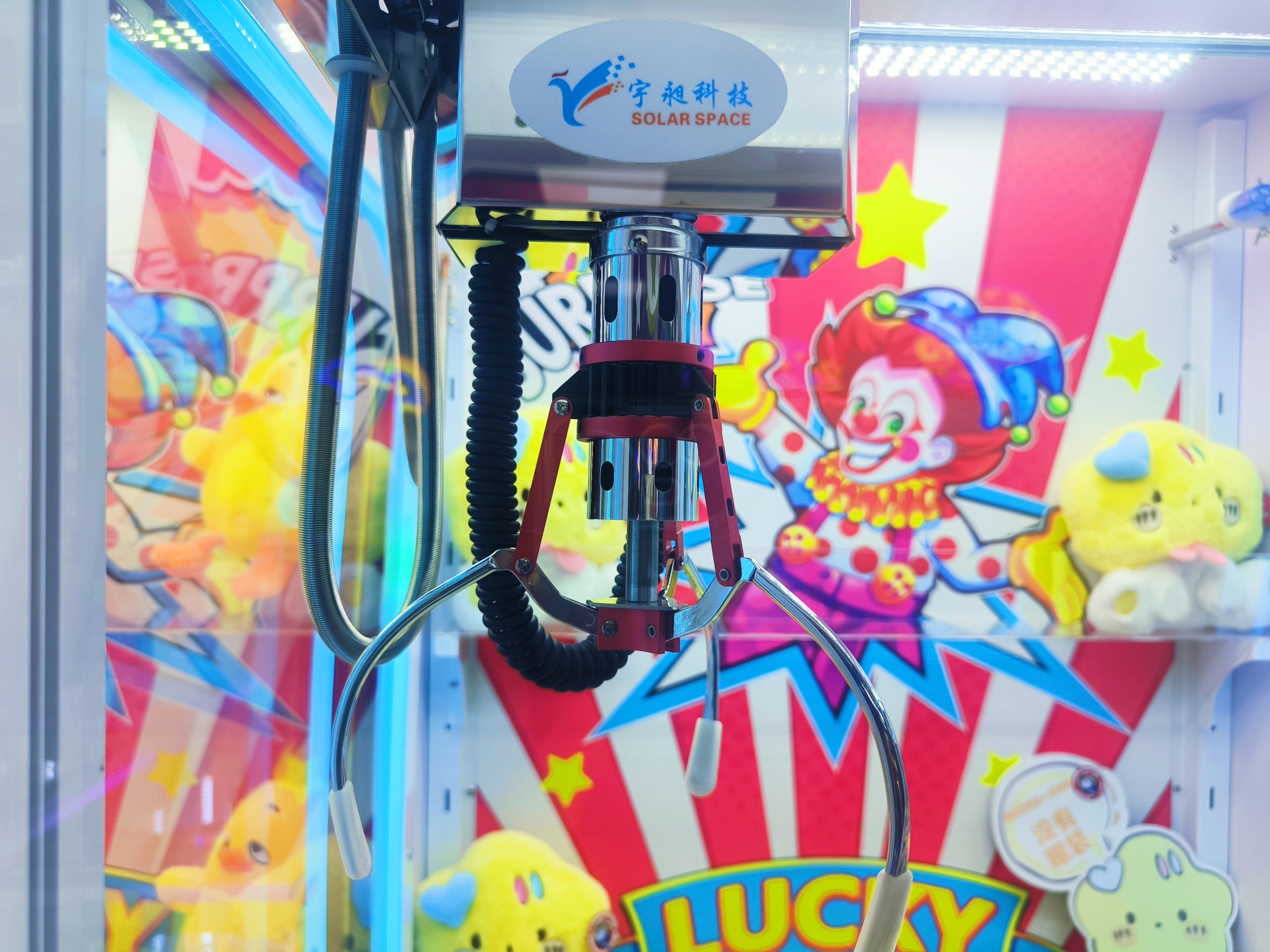
How Claw Strength Settings Affect Profit
Claw strength is one of the most misunderstood yet most important factors in claw machine operation. Many operators focus on machine location or prize cost, but incorrect claw strength settings are often the real reason behind unstable profits and poor player retention.
Understanding how claw strength works—and how to set it properly—can make the difference between a machine that struggles and one that generates steady, long-term income.
What Are Claw Strength Settings?
Claw strength refers to how tightly the claw grips a prize during gameplay. In modern claw machines, this is controlled by the main PCB and motor system rather than being purely mechanical.
Most machines allow operators to adjust:
-
Grip power during pickup
-
Grip power during lifting
-
Grip release timing
-
Win-rate or payout logic
These settings work together to control how often a player can successfully win.
The Direct Link Between Claw Strength and Profit
Claw strength affects profit in three key ways: win frequency, player trust, and repeat play.
Too Strong: Short-Term Wins, Long-Term Losses
When the claw is set too strong:
-
Players win too easily
-
Prizes are taken quickly
-
Profit margins drop
Although players may feel excited at first, the machine becomes unsustainable. Operators often underestimate how quickly prize costs can exceed revenue.
Too Weak: Frustration and Lost Players
When the claw is too weak:
-
Players feel the game is unfair
-
Complaints increase
-
Repeat play drops
In shopping malls and arcades, frustrated players simply walk away. Once trust is lost, even a good location cannot recover performance.
Balanced Settings: Stable and Predictable Profit
The most profitable machines use balanced claw strength settings.
This means:
-
Wins feel achievable
-
Players stay engaged
-
Payouts remain controlled
A well-balanced machine encourages players to try “just one more time,” which is where consistent profit comes from.
How Win-Rate Programming Works
Modern claw machines usually operate on a controlled payout system rather than pure chance.
Common methods include:
-
Strong grip activated every set number of plays
-
Variable grip strength based on accumulated credits
-
Hybrid systems combining time and play count
This allows operators to maintain a predictable return while keeping gameplay fair.
Other Factors That Influence Claw Strength Performance
Claw strength does not work in isolation. Several external factors also affect results:
Prize Weight and Shape
Heavier or smooth-surfaced prizes require different settings compared to light plush toys.
Claw Size
A claw that is too large or too small for the prize reduces grip efficiency.
Prize Layout
Tightly packed prizes increase difficulty, while loose layouts make wins more frequent.
Ignoring these factors often leads operators to incorrectly adjust claw strength alone, creating inconsistent results.
How Often Should Claw Strength Be Adjusted?
Claw strength is not a “set and forget” setting.
It should be reviewed when:
-
Prizes are changed
-
Play price is adjusted
-
The machine is moved to a new location
-
Player behaviour changes
Regular fine-tuning ensures stable performance over time.
Why Professional Setup Matters
Low-end machines often offer limited or unstable claw strength control, making fine adjustment difficult. Professional-grade machines allow precise calibration, enabling operators to balance entertainment and profitability more effectively.
This is one reason why experienced operators focus on machine quality, not just purchase price.
Final Thoughts
Claw strength settings directly shape both player experience and profit performance. Machines that are too generous lose money, while machines that feel unfair drive players away. The most successful operators understand that profit comes from balance, not extremes.
By setting claw strength correctly—and adjusting it based on real performance data—operators can achieve stable income and long-term success.

